Expansion of production, purchase of new automated lines or opening of additional workshops in 2026 almost always come up against the problem of deficit of the electric grid. When the enterprise critically needs to obtain additional, for example, +200 kW of electric power, the standard appeal to the local distribution system operator (Oblenergo) under the Technical Conditions (TU) turns into a barrier to business development.
Classic problems when obtaining additional power:
Terms The duration of approval and implementation of the TU is usually from a year.
Capital intensity Requirements for the reconstruction of the substation, construction of a new TP or replacement of cable lines are fulfilled at the expense of the enterprise and are donated to the balance of the local distribution system operator.
Loss of the market Freezing of operating activities for a year means direct loss and lost contracts.
Peak Shaving Technology - additional power behind the internal meter
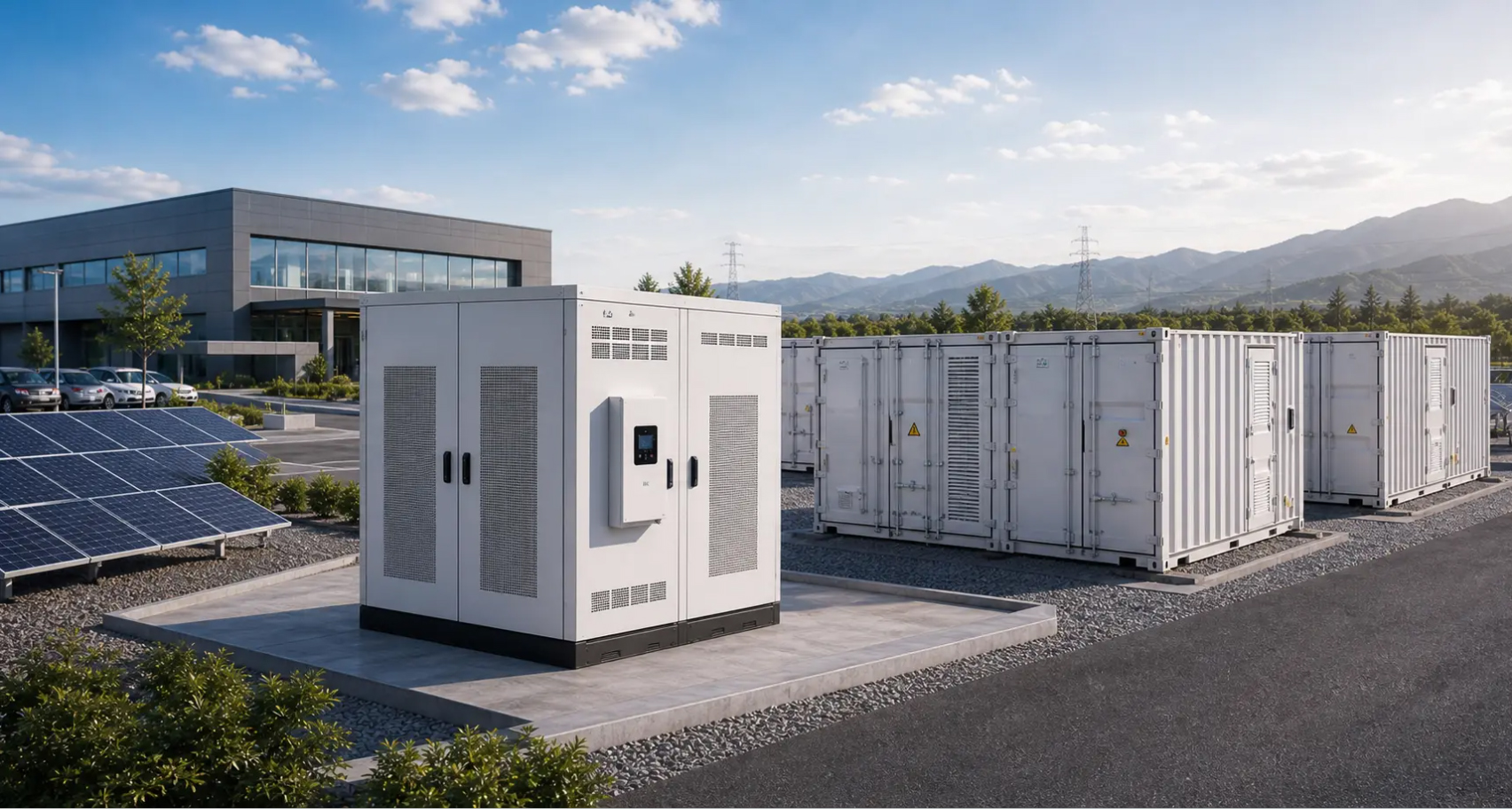
A modern alternative to building new networks is the installation of containerized industrial Energy Storage Units (ESU). The storage system is mounted directly behind the internal meter of the facility. Since the enterprise does not request an increase in the permitted power in the external network, the expansion of the technical specifications and bureaucratic approvals are not required.
How power blending works on an example**
- Existing connection - the plant has a limit from the network of 500 kW.
- Peak load - a new production line requires 700 kW.
- Intelligent blending - the system reacts in milliseconds and as soon as the consumption exceeds the permissible kW capacity, the UZE instantly adds the insufficient 200 kW from the battery modules.
- Charge recovery - after the peak load declines, the storage is recharged from the network during hours of minimum consumption or at a cheaper night tariff.
Comparison: Classic TU vs Industrial UZE
| Parameter | Classic TU expansion | UZE installation |
|---|---|---|
| Commissioning period | 12–14 months | 1–2 months |
| Bureaucracy and approvals | Long TU, land acquisition, permits | None (within the territory of the facility) |
| Asset ownership | Transfer of infrastructure Oblenergo | Own liquid asset on the balance sheet |
| Additional features | None | Industrial UPS + Night Arbitrage |
| Impact on P&L and EBITDA | Frozen investments without income | Profit from the new line in a month |
Economic benefit for C-Level and CFOs
Reduction of Opportunity Cost
Launching the line 13 months earlier generates additional marginal profit, which fully covers the capital expenditure (CAPEX) for the acquisition of the UZE.
Night Arbitrage and SPP
The storage device allows you to charge batteries at night at a low rate or accumulate surpluses from your own rooftop solar power plants (SPP).
Process continuity
Thanks to its millisecond response, the UZE acts as a powerful uninterruptible power supply (UPS), protecting equipment from voltage micro-sags and emergency shutdowns.
If you would like to receive a calculation of the UZE configuration (PCS + capacity) for the load profile of your enterprise, please contact ETL Group engineers to develop a personal feasibility study (FES).