A few years ago, an energy storage system (ESS) was considered an expensive addition to a solar power plant. Today, the situation has changed dramatically. For Ukrainian businesses, an energy storage system is becoming as necessary an element of infrastructure as a transformer substation or a backup communication channel. Today, enterprises need not only their own generation, but also the ability to manage energy, accumulate it, and use it when it is most profitable. That is why energy storage systems (ESS, BESS) have become one of the fastest growing areas of the global energy industry.
What is an energy storage system (ESS, UZE)?
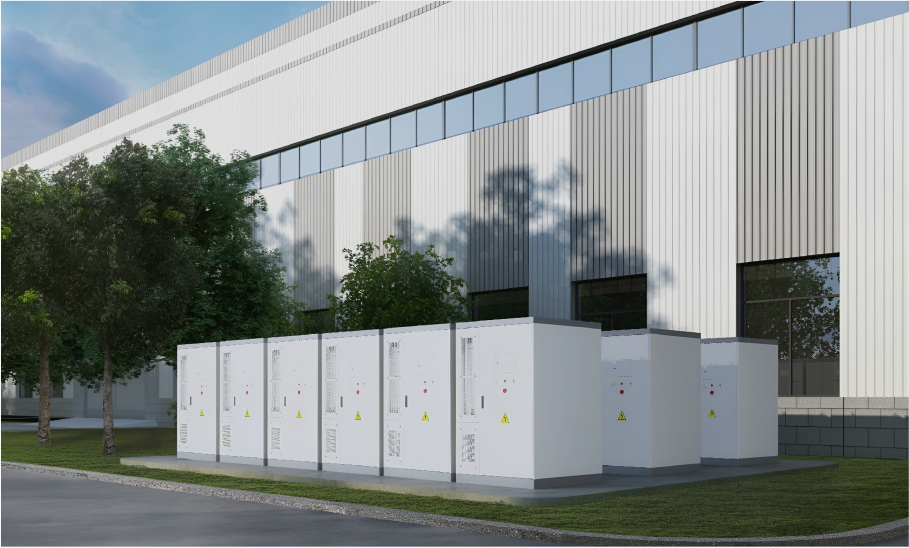
An ESS (Energy Storage System) or energy storage installation (UZE) is a complex of equipment that accumulates electricity and releases it at the right time.
The system includes:
- lithium batteries;
- inverters;
- management system (EMS);
- cooling system;
- software for automatic charge and discharge control.
In fact, the ESS converts electricity into a managed resource.
How does an energy storage system work?
The principle of operation is quite simple. When electricity is cheaper or the solar power plant produces excess generation, the system charges the batteries.
The stored energy is used to power the enterprise at times of:
- peak load;
- high tariffs;
- emergency shutdowns;
- power shortage,
In the case of integration of the ESS + ESS, the enterprise practically ceases to depend on the time of day, because solar energy generated during the day can be used in the evening or at night.
Why have ESS become a strategic business asset?
According to international analysts, the global market for Energy Storage Systems (BESS) will grow several times by the end of the decade. The reason is obvious - solar generation is rapidly becoming cheaper, and the main value is becoming the ability to manage the generated electricity.
That is why today most new industrial projects are implemented according to the scheme:
SES + ESS + digital energy management system (EMS).
What advantages do energy storage systems provide to enterprises?
1. Backup power supply of the enterprise
The most obvious function of ESS is to ensure continuous production. In the event of an emergency power outage, the battery automatically takes over the load. This protects the enterprise from downtime, preserves production equipment, ensures the continuity of technological processes and the fulfillment of contractual obligations. For many industries, one hour of downtime is much more expensive than the daily operation cycle of the storage system.
2. Replacing expensive electricity
One of the main tasks of ESS is Peak Shaving. The enterprise accumulates cheaper electricity or uses its own solar generation, and during the hours of maximum tariff does not purchase expensive electricity from the grid.
Thus, consumption is reduced during peak load hours, electricity bills are reduced and the cost structure is optimized. For energy-intensive enterprises, this can mean a significant reduction in operating costs.
3. Tariff optimization
Modern energy storage systems allow you to automatically operate in accordance with the enterprise's tariff model.
| ESS: | Business receives: |
|---|---|
| charges during hours of minimum electricity cost | predicted cost of electricity |
| uses accumulated energy during hours of expensive tariff | less dependence on market fluctuations |
| maintains a stable consumption schedule | more efficient use of energy resources |
4. Energy arbitrage
For enterprises operating in the electricity market, ESS opens up the possibility of energy arbitrage. The essence is simple:
buy electricity cheaper → store it → use or sell it when the market price is higher
This is especially relevant for working in the DAM (day-ahead market) and BR (balancing market) markets. Thus, the accumulator becomes not only an element of reservation, but also a tool for generating additional income.
5. Maximum use of a solar power plant
Without ESS, part of the energy produced by a solar power plant may be used inefficiently. With an accumulator, the enterprise consumes its own generation from a solar power plant to the maximum, transfers the energy produced during the day to the evening hours, and minimizes the purchase of electricity from the network.
That is why the combination of a solar power plant + ESS is considered the most effective model of corporate energy today.
6. Supporting ESG and decarbonization
Most international companies are increasingly paying attention to sustainable development indicators. The use of energy storage systems allows:
- to increase the share of their own renewable energy;
- to reduce CO₂ emissions;
- to improve ESG indicators;
- to meet the requirements of international partners and investors.
Which enterprises benefit most from installing ESS?
For each of them, the key advantage is continuity of work and control over energy costs. But most often, energy storage systems for businesses are installed in:
- manufacturing enterprises;
- agricultural complexes;
- logistics centers;
- shopping and entertainment complexes;
- warehouse complexes;
- data centers;
- medical institutions;
- municipal enterprises.
How to choose an energy storage system?
Before installing ESS for an enterprise, it is necessary to conduct a comprehensive energy analysis.
During design, the following are taken into account:
- daily consumption profile;
- maximum loads;
- installed capacity;
- availability of a solar power plant;
- tariff model;
- the possibility of operating in the electricity market;
- scaling prospects.
That is why there is no universal solution, because each system is designed individually for the tasks of a specific business.
ETL Group — comprehensive solutions of solar power plants + ESS for enterprises
ETL Group has been implementing comprehensive energy projects for Ukrainian businesses as an EPC contractor for over 15 years. The company performs a full cycle of work: energy audit, feasibility study, design, equipment selection, construction of solar power plants, integration of energy storage systems (ESS, UZE), automation and digital management, service. We help enterprises form a long-term energy strategy that combines energy efficiency, financial feasibility and resilience to changes in the energy market.
An energy storage system (ESS) is a strategic energy asset of an enterprise. It ensures uninterrupted operation, allows for more efficient use of its own generation, optimizes electricity costs and creates new opportunities for participation in energy markets.
In combination with a solar power plant for business, the storage system forms a modern energy ecosystem that increases the competitiveness of the enterprise, strengthens its energy independence, and ensures long-term economic efficiency.